Call Me
+86-19280460621

Email
Dora.chen@fvluoky.com
A pressure reading can look perfectly stable and still be gradually moving away from the true process condition. This is what makes transmitter drift difficult to notice in continuous operation. Unlike a sudden sensor failure, drift often develops slowly. The control system continues receiving a plausible signal, operators continue trusting the trend, and the deviation may only become obvious when the instrument is checked against a known reference.
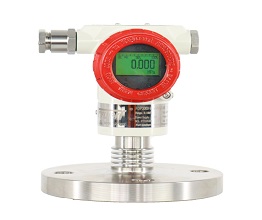
For a smart pressure transmitter, long-term reliability therefore means more than producing an accurate reading when the device is first commissioned. The measurement should remain sufficiently stable as the transmitter experiences temperature changes, repeated pressure cycles, vibration, process exposure, and normal component aging. Installation also matters. A directly mounted threaded pressure transmitter, for example, can operate very reliably when correctly matched to the application, but its long-term behavior still depends on the process connection, operating temperature, mechanical stress, and the condition of the pressure port.
Understanding how drift develops makes it easier to decide when a changing pressure value reflects the process and when the measurement itself needs attention.
Drift is a gradual change in transmitter output that is not caused by an equivalent change in the actual pressure being measured. It may appear as a shift in zero, a change in measurement span, or a small change in response across the operating range.
Several mechanisms can contribute to this behavior over time. The sensing element is repeatedly exposed to pressure and temperature, and its mechanical characteristics can change slightly after prolonged service. Electronic components also experience aging, while changing ambient temperature can affect the sensor and signal-processing circuitry. Modern compensation helps reduce these effects, but it cannot make an instrument completely independent of its environment.
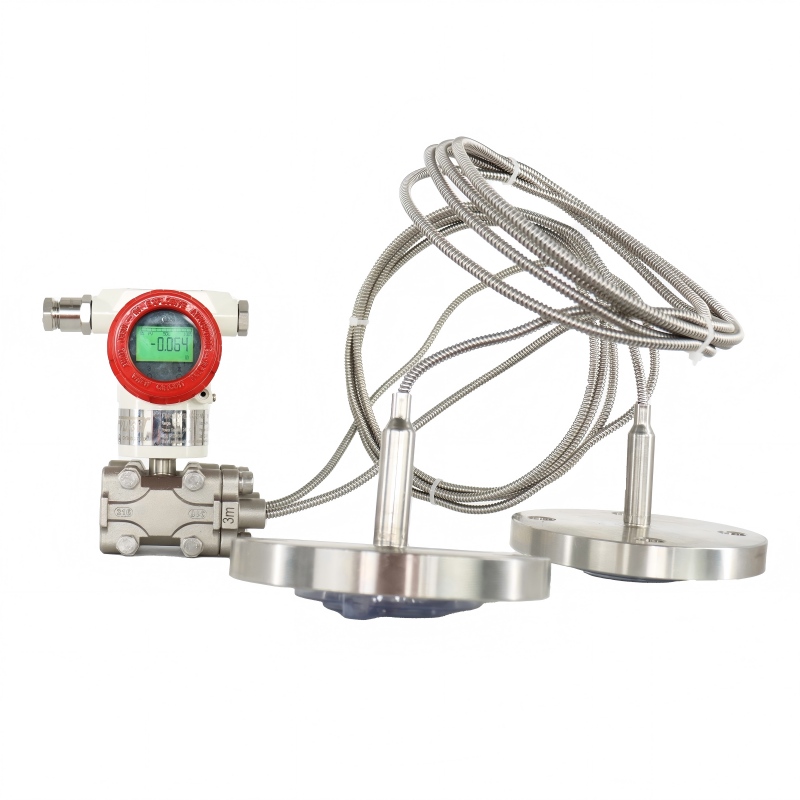
The process side of the transmitter is equally important. Deposits at the pressure opening, changes in fill fluid or remote seal conditions, corrosion of wetted parts, and mechanical damage can alter how pressure reaches the sensing element. What appears to be electronic drift may therefore originate from the interface between the process and the instrument.
Installation can introduce additional influences. On a threaded pressure transmitter, the connection should provide secure process isolation without subjecting the instrument to unnecessary mechanical stress. Repeated heating and cooling, pipeline vibration, or changes around the process connection can affect long-term measurement behavior even though the transmitter itself remains functional.
This is why drift should not automatically be treated as a sensor-quality problem. A smart pressure transmitter is part of a complete measurement point, and instability can originate from the sensor, the process interface, the installation, or a combination of all three.
Initial accuracy and long-term accuracy are related, but they are not the same thing. An instrument can meet its accuracy requirement immediately after calibration and still become less representative of the true process pressure as its zero point or response gradually shifts.
This distinction is especially important in applications where pressure measurements remain in service for long periods between verification checks. A small offset may have little operational effect in a non-critical monitoring point. The same offset can be much more important when the signal is used to control a narrow operating window, calculate another process variable, or trigger an alarm.
Long-term measurement reliability therefore depends on stability as well as initial specification. Buyers often compare transmitters according to accuracy figures, pressure range, communication capability, and construction. Those characteristics matter, but they do not replace the need to consider how the instrument will behave in the actual environment over time.
A transmitter operating under moderate, stable conditions will usually face a different long-term challenge from the same instrument installed on a hot, vibrating line with frequent pressure cycling. The underlying transmitter technology may be identical, yet the measurement histories can be very different.
For this reason, pressure measurement should be evaluated in terms of the entire service condition. When FVLUOKY works with industrial pressure measurement applications, the choice between different transmitter structures is tied to how the instrument will connect to and interact with the process, rather than treating nominal accuracy as the only selection criterion.
The operational effect of drift often comes from duration rather than from the size of a single deviation. A small change may be difficult to recognize from one reading, particularly when the process itself naturally fluctuates. Over weeks or months, however, the control system may begin operating around a measurement that no longer represents the original reference condition.
Consider a pressure-control loop that has historically maintained a stable process. If the transmitter zero gradually shifts, the controller does not know that the measurement has changed. It simply responds to the signal it receives. The actual process pressure can therefore move away from the intended value while the displayed pressure still appears to be on target.
The same issue can affect trend analysis. Historical data is valuable because operators use it to compare batches, identify process changes, and detect developing equipment problems. If the smart pressure transmitter supplying that data has drifted, part of the apparent process trend may actually come from the measurement system.
This becomes more difficult when several small influences occur together. A slight sensor shift, changing ambient temperature, and gradual buildup at the pressure connection may each have a limited effect individually. Together, they can make the measurement increasingly difficult to interpret.
The practical concern is therefore not that every minor deviation immediately creates a serious error. It is that unnoticed deviations can change the baseline on which later operating decisions are made.
| Observed Measurement Behavior | Possible Explanation | What Helps Confirm the Cause | Likely Response |
|---|---|---|---|
| Stable offset across operating conditions | Zero shift or installation-related bias | Comparison with a traceable pressure reference | Verify installation and recalibrate if appropriate |
| Error increases as pressure rises | Span-related change or sensor response issue | Check at several points across the operating range | Evaluate calibration and sensor condition |
| Reading changes with ambient temperature | Temperature influence on the measurement system | Compare pressure error with temperature history | Review installation environment and compensation |
| Slow or restricted response | Blocked pressure path or process buildup | Inspect the process connection and response behavior | Clean or correct the pressure interface |
| Irregular shift after vibration or maintenance | Mechanical or installation change | Inspect mounting and compare against a reference | Correct installation before adjusting calibration |
The comparison is useful because not every abnormal reading is true transmitter drift. Identifying the pattern first can prevent unnecessary recalibration when the real problem lies elsewhere.
A smart pressure transmitter does not age at the same rate in every application. Stable process conditions generally place less stress on the measurement system than continuous thermal cycling, pulsating pressure, aggressive chemicals, or strong mechanical vibration.
Temperature is a common source of additional stress because it affects both the sensing element and the surrounding installation. A transmitter may operate within its permitted temperature conditions yet still experience repeated expansion and contraction as a process heats and cools. When the transmitter is mounted directly to hot equipment, temperature at the electronics can also differ significantly from the process temperature itself. These two conditions should not be confused during selection.
Pressure cycling creates another type of long-term stress. A measurement point that remains relatively steady is different from one exposed to frequent startup cycles, pump pulsation, or rapid changes in pressure. The transmitter range may technically cover both applications, but the dynamic service condition is much more demanding in the second case.
Process contamination can create problems that resemble drift. A threaded pressure transmitter mounted directly into a process connection has a relatively straightforward pressure path, but deposits or crystallizing media around that path can gradually affect pressure transmission. In such a case, changing readings may result from the process interface rather than from a permanent change in the sensor.
Corrosive media should be considered in the same way. If the wetted material is not suitable for the process, gradual attack can affect both service life and measurement performance. Selecting the correct transmitter structure is therefore part of long-term stability planning, not merely an installation decision.
FVLUOKY offers several pressure transmitter configurations for different process interfaces. Reviewing the available FVLUOKY smart pressure transmitter and threaded pressure transmitter options alongside the real pressure, medium, temperature, and mounting conditions makes more sense than choosing a model from pressure range alone.
This is often the hardest part of diagnosing a questionable pressure reading. A transmitter exists to detect process change, so a moving signal should never be labeled as drift simply because it is unexpected.
The first clue usually comes from comparison. If pressure changes while related process variables change in a consistent way, the signal may be reporting a real event. A pump operating differently, a valve moving, a temperature shift, or a change in flow can all create legitimate pressure changes. If the pressure value moves while other process evidence remains inconsistent with it, the measurement point deserves closer investigation.
Historical trends can also reveal whether the change is sudden or progressive. Genuine process events often correspond to a known operating change, while drift may develop gradually without a clear process trigger. This distinction is not absolute, but it helps narrow the investigation.
The strongest confirmation comes from checking the transmitter against a suitable reference. A single zero check can reveal some problems, but it may not identify every type of measurement change. When the behavior of the transmitter across its range matters, verification at more than one pressure condition provides a clearer picture of whether the issue is primarily zero shift, span change, or something outside the transmitter itself.
Before changing calibration, the pressure connection should also be inspected. If a port is blocked or the installation has changed mechanically, recalibrating the smart pressure transmitter can hide the symptom without correcting the underlying cause.
Long-term stability starts before commissioning. A transmitter that is poorly matched to the process will require more corrective attention than one selected with realistic service conditions in mind. Pressure range, process temperature, wetted material, connection design, vibration, and the expected operating pattern all influence how the measurement behaves after installation.
Commissioning then establishes the baseline. Confirming the installed instrument against an appropriate reference provides a known starting point for later comparison. This becomes particularly useful when operators need to determine whether a reading several months later represents normal measurement variation or a meaningful change.
Once the instrument is operating, maintenance intervals should reflect the importance and severity of the measurement point. A transmitter in benign service does not necessarily need the same verification strategy as one controlling a demanding chemical or energy process. Likewise, automatically calibrating every transmitter at identical intervals can create unnecessary work without improving measurement reliability.
Smart diagnostics can help identify some abnormal conditions, but they do not eliminate the need for periodic verification. A smart pressure transmitter can report internal information and communicate effectively with a control system while still being influenced by a blocked process connection or by conditions outside the electronics.
Maintenance history becomes particularly useful over the lifecycle. If the same threaded pressure transmitter repeatedly requires adjustment, the question should shift from “Does it need calibration again?” to “Why does this measurement point keep changing?” The answer may involve the transmitter, but it may also reveal excessive temperature, vibration, an unsuitable range, a problematic connection, or a process medium that requires a different construction.
When recurring instability makes the cause difficult to identify, discussing the measurement history together with the operating conditions is more useful than providing only a model number. Users can share the pressure application and stability concerns with the FVLUOKY team so the transmitter configuration and installation conditions can be considered together.
Drift matters because pressure measurements often remain in service long after their initial calibration. Even a small change in transmitter response can gradually alter process trends, control decisions, and confidence in historical data when it goes unnoticed.
A reliable smart pressure transmitter therefore needs more than good initial accuracy. Its measuring range, process interface, installation environment, and maintenance strategy should all support stable operation over time. For a threaded pressure transmitter, attention to direct-mount conditions, temperature exposure, process buildup, and mechanical installation is equally important.
The goal is not to assume that every changing reading is drift or to recalibrate instruments whenever values look unusual. Better long-term reliability comes from understanding how the process and the measurement system interact, checking questionable readings against independent evidence, and correcting the actual cause of instability rather than only the visible symptom.
Drift is a gradual change in transmitter output that occurs even though the actual pressure has not changed by the same amount. It can appear as a zero shift, span change, or another slow change in measurement response.
All measurement instruments can experience changes during long-term service. The practical effect depends on transmitter design, process severity, installation conditions, and how regularly the measurement is verified.
Temperature can influence measurement behavior, especially when the transmitter experiences large or repeated thermal changes. The installation should therefore consider both process temperature and the temperature reaching the transmitter itself.
Compare the reading with related process variables, historical behavior, and an appropriate pressure reference. The process connection should also be inspected before assuming that the sensor has drifted.
Yes, particularly if the installation is exposed to vibration, excessive temperature, mechanical stress, or buildup at the pressure opening. These conditions should be checked before recalibrating the instrument.
Not always. Recalibration can correct measurement offset, but recurring drift may point to sensor aging, process buildup, unsuitable installation conditions, or an instrument that is not well matched to the application.