Call Me
+86-19280460621

Email
Dora.chen@fvluoky.com
In industrial process control, the accuracy of your measurement equipment is only as reliable as its integration into the pipeline. Whether you are upgrading a legacy system or commissioning a new production line, the way you connect your metal tube flowmeter to your infrastructure plays a decisive role in long-term performance, safety, and maintenance overhead.
At FVLUOKY, we have spent years engineering high-precision instruments for challenging industrial environments. We often see projects where the sensor quality is excellent, but the connection type—Flange vs. Hoop—is mismatched for the application. This guide is designed to help you navigate these choices to ensure your metal rotameter delivers consistent, reliable data.
Flow measurement is the heartbeat of process automation. From chemical dosing to cooling water management, the physical interface between the instrument and the pipe must withstand pressure, temperature fluctuations, and mechanical stress.
A metal tube flowmeter is chosen specifically for its robustness, often replacing fragile glass-tube alternatives in harsh environments. However, the "robustness" of the meter itself can be undermined if the connection method allows for leaks or structural instability. Choosing the correct connection ensures that your flow instruments remain calibrated and leak-free, preventing both production downtime and safety hazards.
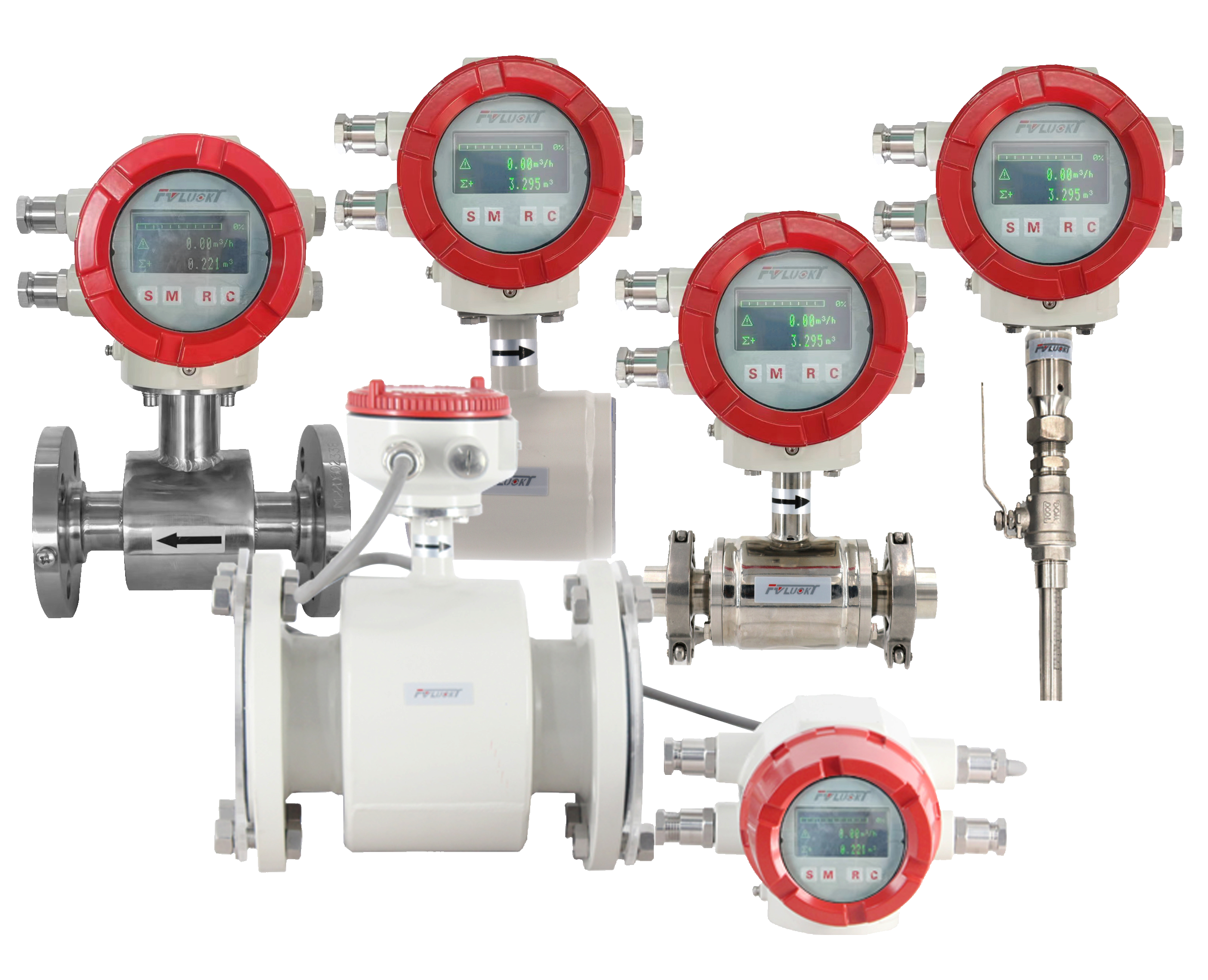
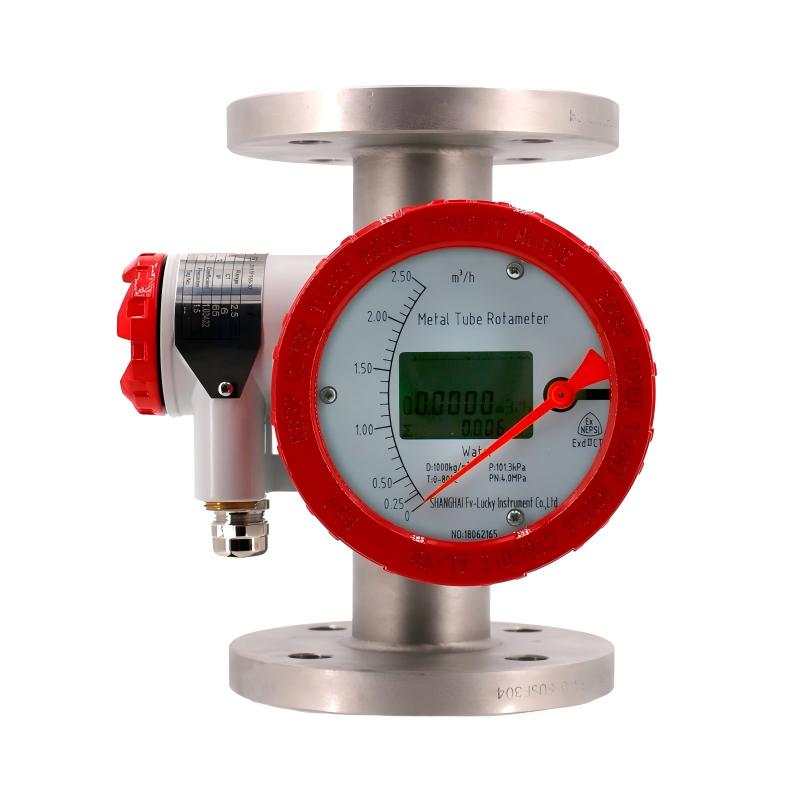
Flange connections are the industrial benchmark for heavy-duty applications. By bolting the meter directly between two heavy-duty flanges on the pipeline, this configuration creates a structural interface that is both rigid and incredibly secure.
High Pressure Capability: Flange connections are the preferred choice for high-pressure systems. They can typically handle pressures exceeding 4.0 MPa, providing a robust seal that won't fail under sudden pressure spikes.
Vibration Mitigation: In environments with heavy rotating machinery, pumps, or turbines, flange connections provide superior vibration resistance. The multi-bolt fastening system distributes mechanical loads evenly across the pipe joint.
Standardized Integration: Flanges follow global standards (such as ASME, DIN, or JIS), making it simple to replace or upgrade a metal rotameter within existing global infrastructure without re-piping.
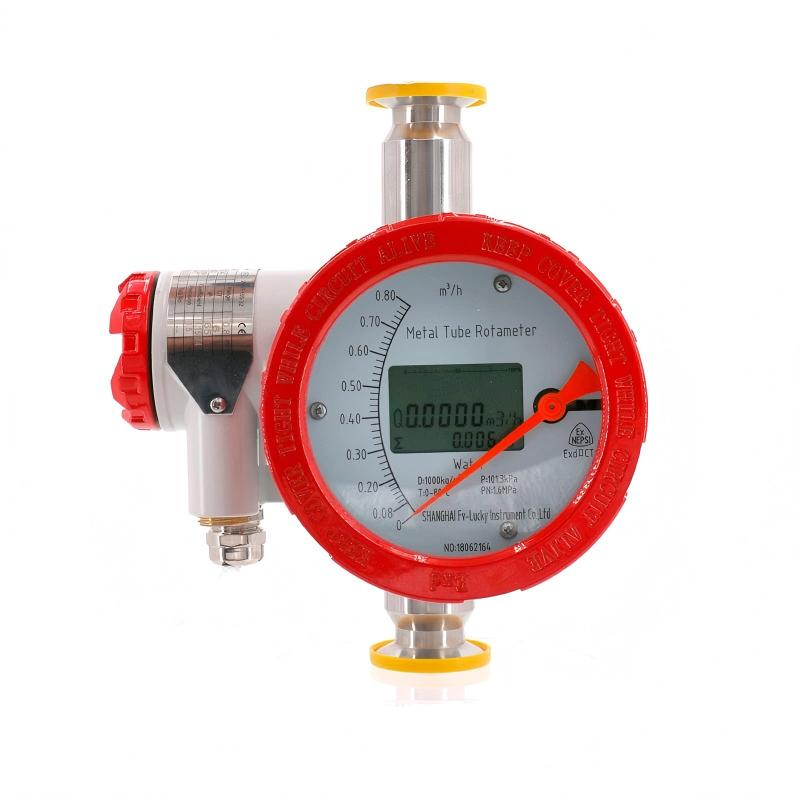
Often referred to as sanitary clamp or tri-clamp connections, Hoop type attachments offer a distinct set of advantages centered on speed and hygiene. Instead of heavy bolts and gaskets, these connections use a precision-machined clamp and an O-ring to secure the meter.
Rapid Maintenance: For processes that require frequent cleaning—such as in food, beverage, or pharmaceutical production—Hoop type connections are indispensable. They allow for tool-less or single-tool disassembly in seconds.
Sanitary Design: The profile of a Hoop connection minimizes dead zones where bacteria or contaminants can accumulate. This is critical for meeting stringent hygiene certifications.
Space-Saving Geometry: Because they lack the wide bolt circles of flanges, Hoop connections are significantly more compact, making them ideal for high-density valve skids or modular equipment skids where space is at a premium.
To make an informed selection for your process, refer to the following comparison of the two primary connection methods used for a modern metal tube flowmeter.
| Feature | Flange Type | Hoop (Clamp) Type |
|---|---|---|
| Pressure Tolerance | High (Robust) | Moderate |
| Installation Speed | Moderate (Requires bolting) | Fast (Quick-release) |
| Vibration Resistance | Excellent | Moderate |
| Ideal Industries | Petrochemical, Mining, Heavy Mfg | Food, Pharma, Biotech |
| Seal Mechanism | Flange Gasket | O-ring / Sanitary Seal |
| Space Requirement | Larger Footprint | Compact/Streamlined |
Choosing the correct interface for your metal rotameter isn't just about the current project; it's about life-cycle management. Consider these four pillars before finalizing your purchase:
Pressure and Temperature Profiling: If your application involves high-pressure steam or volatile hydrocarbons, the Flange type is non-negotiable. The structural integrity provided by the flange-bolt-gasket combination is superior for extreme process conditions.
Frequency of Cleaning (CIP/SIP): If your production requires "Clean-in-Place" or "Steam-in-Place" protocols, the Hoop connection is the industry standard. It simplifies maintenance and reduces the labor hours required for routine inspections.
Vibration Environment: Is your flowmeter mounted on a main line near a large compressor or high-speed pump? The rigidity of Flange connections prevents the "loosening" effect that can occur with clamp-style connections under prolonged harmonic vibration.
Material Compatibility: Always verify that the sealing material (for both Gaskets and O-rings) is compatible with your process fluid. At FVLUOKY, we provide customized sealing solutions to ensure long-term chemical compatibility.
If you are unsure which connection fits your specific application, our technical team is ready to assist. Contact our engineers today to discuss your flow measurement requirements and receive a tailored recommendation.
Selecting the right connection for your metal tube flowmeter is a balance between operational safety and process efficiency. Flange connections deliver the structural durability required for heavy-duty industrial environments where pressure and vibration are constants. Conversely, Hoop (Clamp) connections offer the agility and hygiene necessary for modern, fast-paced processing plants. By aligning your hardware choice with your specific operational demands, you ensure consistent production quality, reduced maintenance intervals, and long-term instrument reliability.
At FVLUOKY, we are committed to moving forward with core technology and professionalism, providing high-quality measurement solutions that exceed industry expectations.
1.Can Hoop type connections be used in high-pressure steam applications?
No. Hoop/Clamp connections are designed for low to moderate pressures. High-pressure steam applications require the mechanical strength of a Flange type connection to prevent gasket blowout and ensure safety.
2. Which connection type is better for the food and beverage industry?
The Hoop (Clamp) type is the industry standard for food and beverage applications because it is designed for rapid cleaning and meets sanitary hygiene requirements by eliminating crevices where bacteria could grow.
3. Does the connection type affect the accuracy of the metal rotameter?
While the connection itself does not change the internal measurement principle, a poorly installed or misaligned connection can induce stress on the meter body, potentially affecting the float movement and measurement accuracy. Proper installation is key.
4. Can I convert a Flange type meter to a Hoop type later?
Generally, this is not recommended as it requires modifying the meter body and potentially changing the pressure rating. It is best to specify the correct connection type at the time of order based on your current process requirements.
5. What is the most common reason for leaks in metal tube flowmeters?
The most common cause is the use of incorrect gasket or O-ring materials that are incompatible with the process fluid. Always ensure your seal material matches your chemical profile and temperature range.